Table of Contents
- What Sets Frozen Custard and Ice Cream Apart
- Frozen Custard Ingredients: What You Need for the Perfect Base
- How to Make Frozen Custard at Home: Step-by-Step
- Homemade Frozen Custard Recipe (No Ice Cream Maker Required)
- Side-by-Side Comparison: Texture, Flavor, and Serving Temperature
- Troubleshooting and Food Safety for Homemade Frozen Desserts
- Conclusion
- Frequently Asked Questions
Last Updated: October 19, 2026
What Sets Frozen Custard and Ice Cream Apart
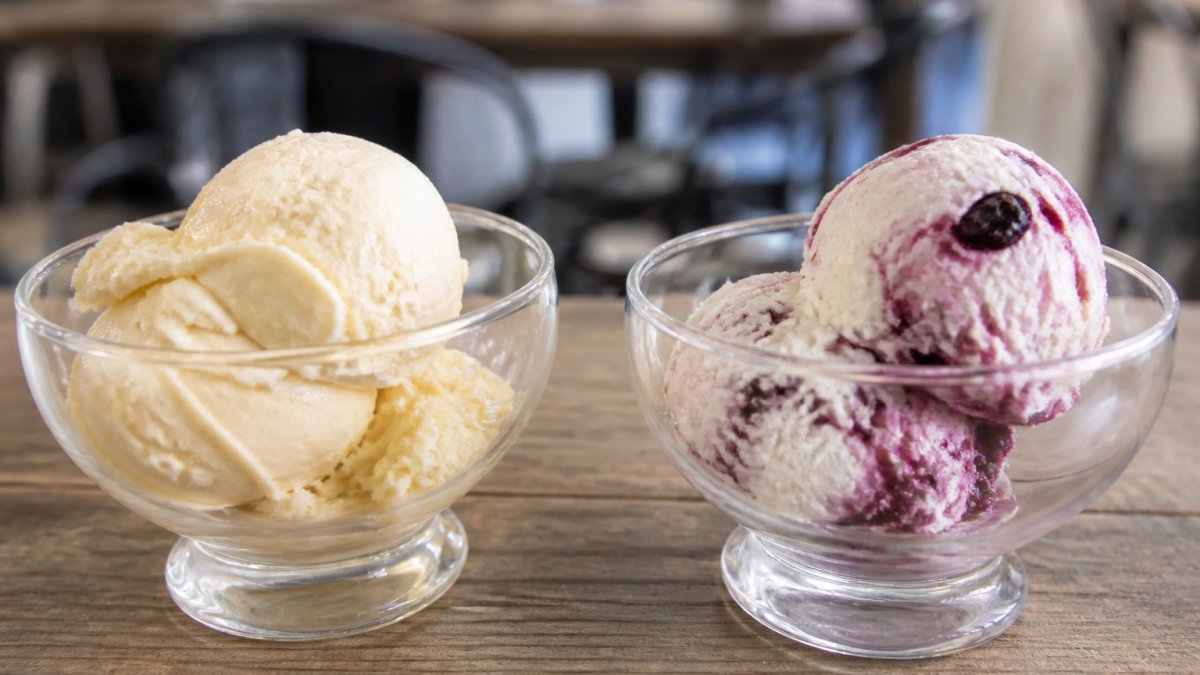
Frozen custard is a frozen dairy dessert made with at least 10% butterfat and at least 1.4% egg yolk solids, churned with very little air and served fresh at a warmer temperature than ice cream. Ice cream is a frozen dairy dessert that may or may not contain eggs and can legally hold far more air. That difference explains why one feels dense and silky on the spoon while the other feels light and fluffy.
At Fat Guy Frozen Custard, we make frozen custard every day, and the difference between frozen custard vs ice cream comes down to three variables: egg yolks, air, and serving temperature. Change any one of them and you get a different dessert.
The Role of Egg Yolks in Frozen Custard
Egg yolks do two jobs in a custard base. They add fat and lecithin, which coat the tongue and create that unmistakable richness, and they act as an emulsifier, holding water and fat together so the finished product freezes smooth instead of icy.
Federal standards matter here. Under U.S. Food and Drug Administration standards for frozen desserts, frozen custard must contain at least 10% milkfat and 1.4% egg yolk solids. Ice cream requires only 10% milkfat and no eggs at all. That egg yolk content is the single biggest reason custard tastes richer than most ice cream.
A common mistake is assuming “custard-style ice cream” at the grocery store is the real thing. Often it contains egg yolks but still gets pumped full of air, so the texture lands closer to ice cream than custard.
Air, Overrun, and Texture
Overrun is the amount of air whipped into a frozen dessert, expressed as a percentage of the base volume. Commercial ice cream can legally contain up to 100% overrun, meaning half the container is air. Frozen custard is churned slowly to keep overrun low, usually well under half that.
Less air means a denser, heavier scoop. More air means a lighter, fluffier one that melts faster and tastes less concentrated.
If you want to judge quality quickly, weigh the container in your hand. A pint that feels surprisingly light is mostly air. A pint that feels like it has heft is doing the churning right.
Custard is smooth and creamy because the egg yolks and low overrun leave little room for ice crystals to form. Ice cream is smooth too, but its lightness comes from incorporated air rather than fat and yolk.
Frozen Custard Ingredients: What You Need for the Perfect Base
A frozen custard base needs five things: dairy fat, egg yolks, sugar, a liquid, and flavoring. Get the ratio right and the rest is process.
Here is what goes into a standard home batch:
- Heavy cream and whole milk. Together they supply the butterfat. Skimp on fat and you get icy custard.
- Egg yolks. Roughly four to six large yolks per quart of base. This is the non-negotiable ingredient.
- Sugar. Granulated sugar sweetens and lowers the freezing point, which keeps the custard scoopable.
- Vanilla or your flavoring. Real vanilla extract or a split vanilla bean both work.
- A pinch of salt. It sharpens the dairy flavor without tasting salty.
The process matters as much as the list. Whisk yolks with sugar until pale, temper them with warm dairy so they do not scramble, then cook gently until the mixture thickens into a custard base. Skip the tempering and you will be picking cooked egg out of your dessert. What most guides miss is the chill: a custard base needs to cool completely, ideally overnight, before churning, or you get larger ice crystals and a grainier bite.
How to Make Frozen Custard at Home: Step-by-Step
Here is the process, start to finish.
- Whisk the yolks and sugar. Combine 5 large egg yolks with 3/4 cup sugar until the mixture is pale and thick.
- Heat the dairy. Warm 2 cups heavy cream and 1 cup whole milk with a pinch of salt until it steams but does not boil.
- Temper the eggs. Slowly ladle the warm dairy into the yolk mixture while whisking constantly.
- Cook the base. Return everything to the pot and stir over low heat until it coats the back of a spoon.
- Strain and chill. Pour through a fine mesh strainer into a bowl, cover, and refrigerate at least 4 hours or overnight.
- Churn. Freeze in your ice cream maker according to the manufacturer’s directions.
- Serve soft or firm it up. Eat it right away for soft-serve texture, or transfer to a container and freeze 1 to 2 hours for a firmer scoop.
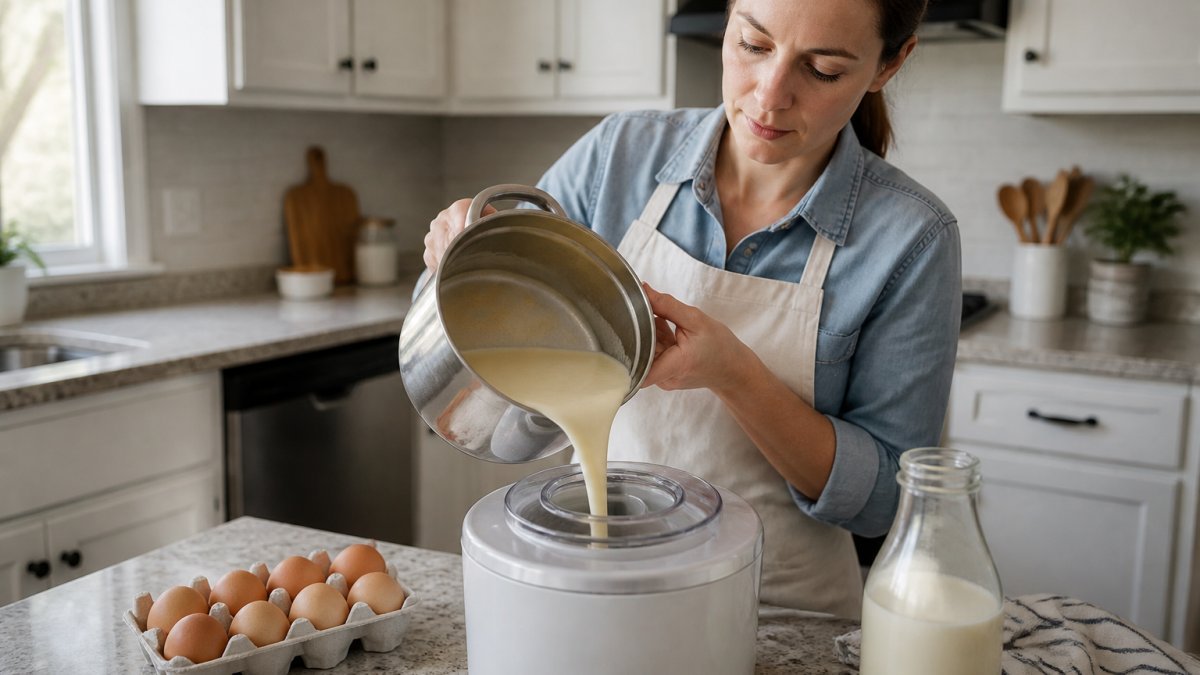
Expected result: A base that coats a spoon cleanly and tastes like melted vanilla ice cream before it ever hits the freezer. If it tastes eggy, you cooked it too fast.
Do not let the base boil. Above roughly 180°F the yolks curdle and the custard turns grainy. Pull it off the heat the moment it thickens.
Homemade Frozen Custard Recipe (No Ice Cream Maker Required)
No machine? You can still make a homemade frozen custard recipe that beats anything from a carton. The trick is the still-freeze method: pour the chilled base into a shallow metal pan, freeze it, and stir it every 30 minutes for the first two to three hours. Each stir breaks up ice crystals as they form. The result is not quite as silky as machine-churned custard, but it is close, and far denser than store-bought ice cream.
Your full ingredient list for this method:
- 5 large egg yolks
- 3/4 cup granulated sugar
- 2 cups heavy cream
- 1 cup whole milk
- 1 tablespoon vanilla extract
- Pinch of salt
Follow steps 1 through 5 above, then spread the chilled base in a 9×13 metal pan and freeze. Stir vigorously every 30 minutes for the first two hours, then let it set for another two. The stirring is the whole game. Skip it and you get a solid block.
Side-by-Side Comparison: Texture, Flavor, and Serving Temperature
The clearest way to understand frozen custard vs ice cream is to compare them on the qualities you actually notice when you eat. A table of definitions only gets you so far; the real answer comes from making both bases with the same dairy, sugar, vanilla, and machine, then tasting them side by side. Here is what we look for when we run that comparison in a home kitchen.
| Feature | Homemade Frozen Custard | Homemade Ice Cream |
|---|---|---|
| Egg yolks | 5 large yolks per quart of base | None, or up to 2 for a richer base |
| Butterfat | At least 10% milkfat required; home bases often land 14-16% | At least 10% milkfat required; home bases often land 12-14% |
| Air content | Low overrun; a home machine typically adds 20-30% air | Higher overrun; a home machine can add 30-50% air |
| Texture at first scoop | Silky, heavy, coats the spoon | Lighter, fluffier, releases from the scoop faster |
| Flavor | Rich, slightly savory from the yolks | Cleaner dairy flavor, brighter vanilla |
| Serving temperature | Around 18°F, soft and immediately flavorful | Around 10-12°F, firmer and slower to release flavor |
| Melt speed | Slow, creamy puddle | Faster, thinner melt |
| Best for | Indulgent, slow eating | Light desserts, sundaes, mix-ins |
What the numbers mean in practice. A home ice cream maker usually lands between 30% and 50% overrun, while a custard base churned slowly in the same machine often lands closer to 20-30% because the yolk proteins and fat globules resist taking on air.
Serving temperature is the detail most people overlook. Custard is served warmer than ice cream, so it hits the tongue soft and releases flavor immediately; ice cream served at the same temperature would melt into a puddle. The practical home rule: pull custard from the freezer at about 18°F and ice cream at about 10-12°F.
Flavor follows the fat and the yolk. Custard tastes richer because the yolks add fat and a subtle savoriness, and the lower overrun concentrates the dairy flavor. Ice cream tastes cleaner and more purely of its dairy and mix-ins. Neither is better. They are different desserts with different jobs.
If you want to run the comparison yourself, make one quart of each base on the same day, chill both overnight, churn both in the same pre-frozen bowl, and taste them at their proper serving temperatures. The difference in density and melt speed will be obvious within the first spoonful.
Troubleshooting and Food Safety for Homemade Frozen Desserts
Most homemade batches fail for one of five reasons, each with a specific cause and fix.
Grainy texture. Ice crystals form when the base is churned too warm or not chilled long enough. Chill the base to at least 40°F, ideally overnight, and pre-freeze the machine’s bowl for the full 12 to 24 hours the manufacturer recommends.
Curdled base. The eggs cooked too fast. Yolks begin to scramble above roughly 180°F, and once they curdle the base turns grainy and cannot be fully rescued.
Too hard to scoop. Not enough sugar or fat, or the dessert sat in the freezer too long. Sugar lowers the freezing point, so a low-sugar base freezes harder.
Eggy taste. Too many yolks or an overcooked base. Strain the base and reduce the yolk count next time. Five large yolks per quart is a good starting point; more than six starts to taste custardy in a way some people dislike.
Excess air or a fluffy, icy result. This is the most common home-machine problem and the one most guides ignore.
Food safety deserves real attention because this dessert contains raw eggs before cooking. The USDA Food Safety and Inspection Service guidance on eggs recommends cooking egg mixtures to a safe internal temperature to kill bacteria.
Use an instant-read thermometer instead of guessing. A base pulled at exactly 160°F is both safe and perfectly thickened. It takes the guesswork out of the hardest step and gives you a repeatable result every batch.
Store homemade custard in an airtight container with plastic wrap pressed directly onto the surface. It keeps best for about a week and develops ice crystals after that; the wrap prevents a skin from forming and limits freezer burn from air contact. For anyone with egg allergies, an eggless ice cream base is the safer route, though it will not have the same richness or resistance to overrun.
Conclusion
Making frozen custard at home is more work than churning a simple ice cream base, and that extra effort with the yolks is exactly what produces the denser, richer scoop. If you would rather skip the tempering and the stirring, come see us at Fat Guy Frozen Custard. We make our custard fresh daily with custom flavors, delicious toppings, and homemade cones, and we would love to be your post-game or post-dinner treat. View our menu and find your next favorite scoop.
Frequently Asked Questions
What is the difference between frozen custard and ice cream?
Frozen custard contains at least 1.4% egg yolk solids and 10% milk fat, while ice cream typically has no eggs and at least 10% milk fat. The egg yolks in frozen custard make it richer, denser, and creamier. Frozen custard is also churned with less air (lower overrun) and served at a warmer temperature, giving it a smooth, soft-serve-like texture that holds its shape.
What ingredients make homemade frozen custard different from ice cream?
The key difference is egg yolks. A frozen custard base includes egg yolks that are cooked with milk, cream, and sugar to create a custard. This adds richness and a velvety texture. Ice cream relies on milk fat alone for creaminess. Both use dairy, sugar, and flavorings, but frozen custard’s egg yolks are what set it apart.
Can you make frozen custard without an ice cream maker?
Yes. You can make frozen custard without an ice cream maker by using the freeze-and-stir method. Pour the chilled custard base into a shallow pan, freeze for 30 minutes, then stir vigorously every 30 minutes for 2-3 hours until smooth and firm. For a creamier result, use a hand mixer or blender to break up ice crystals during the process.
Why is frozen custard less common in grocery stores?
Frozen custard is less common in grocery stores because its lower overrun and warmer serving temperature make it harder to package and store for retail. It is best enjoyed fresh, shortly after churning. The egg yolk content also shortens shelf life compared to commercial ice cream. Many custard shops serve it fresh daily for the best texture and flavor.
Leave a Reply