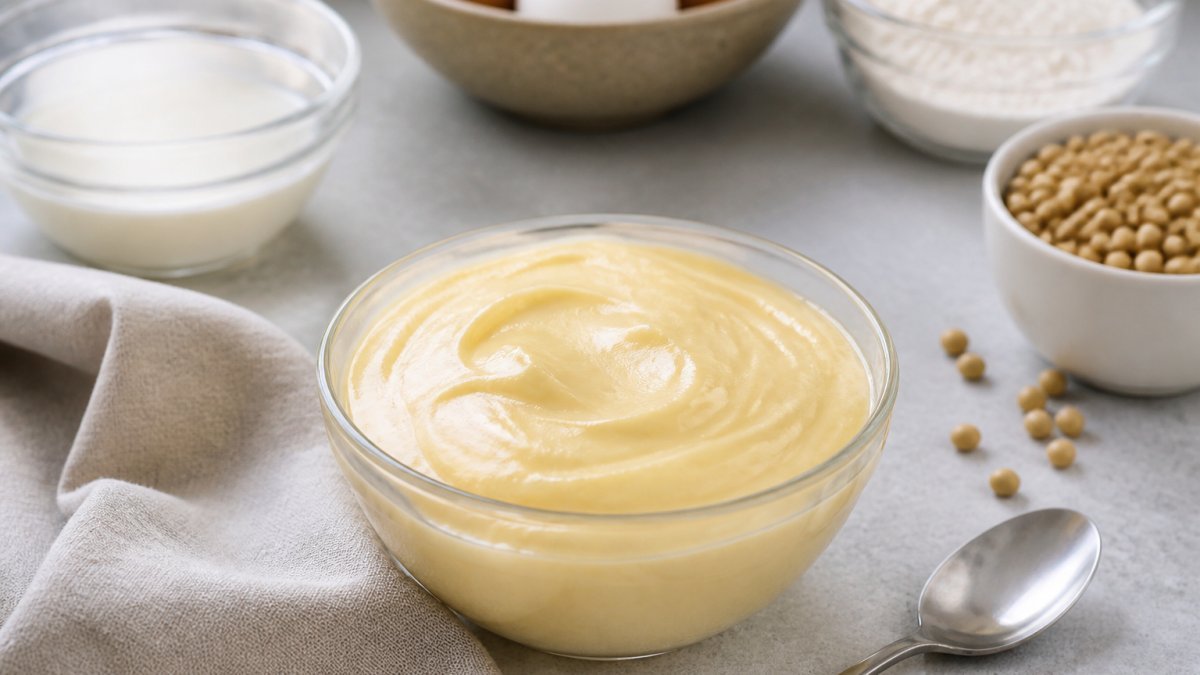
Last Updated: October 23, 2026
Quick Summary
Allergen-friendly custard is a version of this classic dessert made without common allergens like eggs, dairy, or gluten, delivering the same creamy texture while keeping it safe for people with food allergies or intolerances. You can find it at shops that offer allergen-free options, or make it at home using egg substitutes like cornstarch and plant-based milks like oat milk.
- Cornstarch is the most reliable egg replacement: use 2 tablespoons mixed with 2 tablespoons cold milk per egg.
- Oat milk is the top plant milk choice for allergen-friendly custard, creating texture very close to dairy custard.
- Always ask shops about allergens, equipment sharing, and cross-contact prevention before ordering.
- Homemade allergen-friendly custard lasts 3-4 days refrigerated in an airtight container.
- Cross-contact through shared scoops is the biggest risk at ice cream shops; request a clean scoop for your flavor.
Table of Contents
- Understanding Allergen-Friendly Custard
- Custard Allergens and Ingredients: What You Need to Know
- Egg-Free and Eggless Custard Substitutions
- Dairy-Free Custard: Plant-Based Milk Alternatives
- Questions to Ask About Food Allergies at Ice Cream Shops
- Cross-Contact at Ice Cream Shops: Prevention and Safety
- Making Allergen-Friendly Custard at Home
- Storage, Safety, and When to Seek Professional Help
- Frequently Asked Questions
Understanding Allergen-Friendly Custard
Allergen-friendly custard is a version of this classic dessert made without common allergens like eggs, dairy, or gluten, delivering the same creamy texture while keeping it safe for people with food allergies or intolerances.
At Fat Guy Frozen Custard, we believe enjoying dessert shouldn’t mean compromising on safety or flavor. This guide covers finding, choosing, and making allergen-friendly custard.
A food allergy triggers an immune response and can be serious; an intolerance causes digestive discomfort but isn’t life-threatening. Both require careful ingredient checking, but allergies demand stricter precautions.
Always read labels carefully, even on products labeled “allergen-friendly.” Cross-contact can happen during manufacturing. When in doubt, ask the business directly about their preparation methods.
Custard Allergens and Ingredients: What You Need to Know
Common allergens in traditional custard
Traditional custard contains several major allergens. Understanding what’s in standard custard helps you identify safe alternatives.
Eggs provide structure and creamy texture in most custard recipes. Dairy milk adds richness and body. Vanilla extract often contains alcohol, which some people avoid. Wheat flour or other grain thickeners appear in some recipes, though cornstarch is more common.
Beyond these main ingredients, custard can contain:
- Tree nuts (in some flavored versions)
- Soy lecithin (used as an emulsifier)
- Sesame seeds (rare, but check labels)
- Sulfites (used as preservatives in some commercial products)
Many shops use shared equipment for multiple flavors, creating cross-contact risk even if a specific flavor doesn’t contain an allergen directly.
Reading labels and ingredient lists
When shopping for custard or checking a menu, read the full ingredient list, not just the front label, “naturally flavored” or “made with real vanilla” can hide components.
Look for these red flags:
- “May contain” or “processed in a facility with” statements
- Vague terms like “natural flavors” (which can hide allergens)
- Thickening agents listed without specifics
- Emulsifiers or stabilizers that might contain allergens
Ask the business for a complete ingredient list and allergen statement; if they can’t provide it, shop elsewhere.
Never assume a product is safe based on marketing language alone. “Natural,” “homemade,” or “premium” does not mean allergen-free. Always verify the actual ingredients.
Egg-Free and Eggless Custard Substitutions
Egg-free custard requires replacing both the binding and thickening power of eggs. Several substitutes work, each with trade-offs.
Aquafaba (canned chickpea liquid) can partially replace eggs: 3 tablespoons per egg, combined with a starch thickener rather than alone.
Silken tofu blended into your milk base adds creaminess and binds ingredients. Blend 1/2 cup per 2 cups of milk; this works well for vegan or dairy-free custard.
Eggs thicken through protein coagulation; starches thicken through gelatinization, so starch-based custard reaches full thickness at a slightly lower temperature (around 160°F instead of 170°F).
Dairy-Free Custard: Plant-Based Milk Alternatives
Plant-based milks open custard options for people avoiding dairy, but not all work equally well.
Comparing plant milks for custard texture and taste
Coconut milk (full-fat canned, not the beverage) creates rich, indulgent custard; thin it slightly with water.
Soy milk has good protein content and creates a stable custard; choose unsweetened, and use it 1:1 for its versatile neutral flavor.
Almond milk is watery and thin; combine it with oat or coconut milk, or increase your thickener slightly, since alone it produces a thinner, less creamy result.
Cashew milk blended from whole cashews creates naturally creamy custard; it’s richer than almond milk but less common in stores. Use it 1:1.
Rice milk has a neutral taste but lacks body. Combine it with oat milk or increase your starch thickener by 25%.
Here’s a quick reference for plant milk performance in custard:
| Plant Milk | Creaminess | Flavor | Best For |
|---|---|---|---|
| Oat | High | Subtle sweet | Most recipes |
| Coconut | Very high | Strong coconut | Chocolate, tropical |
| Soy | Medium | Neutral | Versatile use |
| Almond | Low | Neutral | Blended with others |
| Cashew | High | Neutral | Premium texture |
| Rice | Low | Neutral | Blended recipes |
Oat milk delivers the best results for most homemade allergen-friendly custard. Its natural creaminess and mild flavor make it the easiest plant milk substitute.
Questions to Ask About Food Allergies at Ice Cream Shops
Before ordering frozen custard at any shop, ask specific questions about allergens and preparation.
“What allergens are in this flavor?” Get a direct answer about eggs, dairy, nuts, gluten, and other major allergens in that specific custard.
“Can you show me the ingredient list or allergen statement?” Reputable businesses have this readily available; hesitation or refusal is a red flag.
“Do you have any certifications for allergen handling?” These don’t guarantee safety but show commitment to proper practices.
“What toppings are available, and do they contain common allergens?” Sprinkles, sauces, and mix-ins often hide allergens, so ask about each one.
Cross-Contact at Ice Cream Shops: Prevention and Safety
Cross-contact happens when an allergen transfers to a food that doesn’t normally contain it.
Shared scoops are the biggest cross-contact risk.
Shared storage containers pose a risk if multiple flavors sit close together or use the same storage area.
Shared mixing equipment matters if the shop makes custard in-house.
Hand contact is another pathway. Staff handling multiple flavors without changing gloves can transfer allergens from one to another.
Toppings and mix-ins stored near each other can cross-contact.
Prevention steps a responsible shop should take:
- Use separate, clean scoops for each flavor
- Wash hands between handling different flavors
- Store allergen-containing toppings separately
- Use dedicated equipment for allergen-free custard
- Train staff on cross-contact risks
- Keep detailed records of ingredients and suppliers
If a shop can’t explain their cross-contact prevention procedures, it’s safer to make custard at home where you control all variables.
Making Allergen-Friendly Custard at Home
Step-by-step recipe and preparation
Making allergen-friendly custard at home gives you complete control over ingredients and preparation. Alternatively, you can order custom allergen-friendly custard treats online.
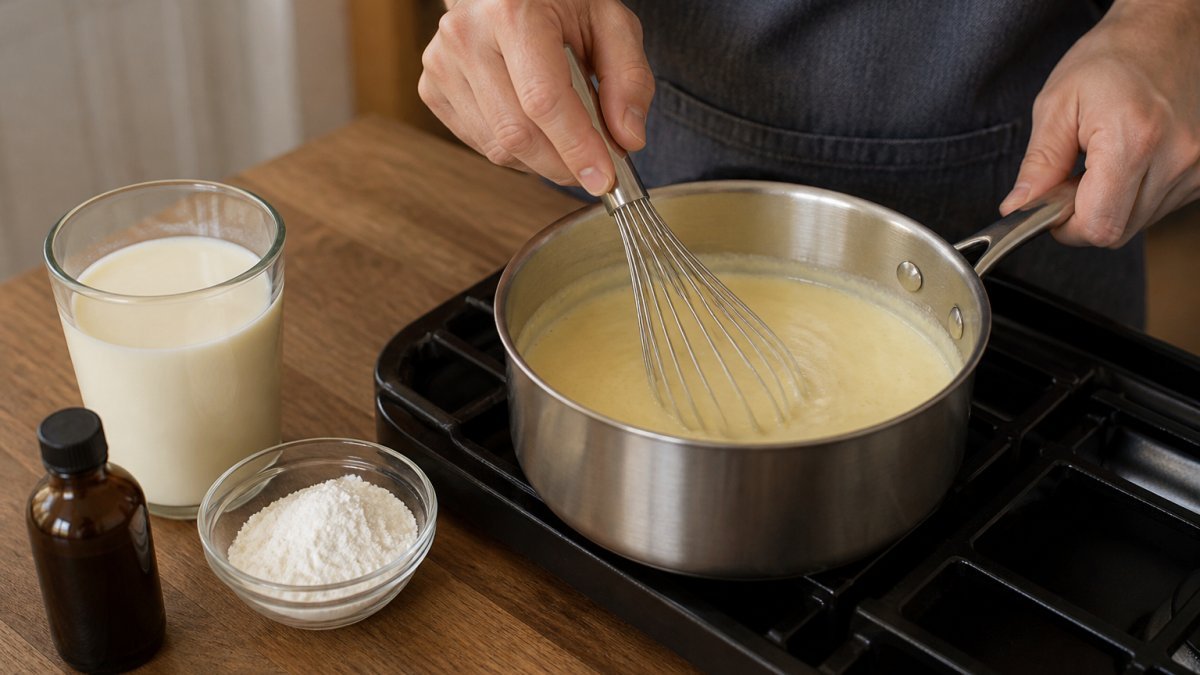
What you’ll need:
- 2 cups of your chosen milk (dairy or plant-based)
- 2 tablespoons cornstarch or arrowroot powder
- 2 tablespoons cold milk (to mix with starch)
- 1/4 cup sugar or your preferred sweetener
- 1 teaspoon vanilla extract (or 1/2 teaspoon vanilla bean paste)
- 1/4 teaspoon salt
- A saucepan, whisk, and thermometer (optional but helpful)
Step 1: Mix your starch [Time: 2 minutes]
Pour 2 tablespoons of cold milk into a small bowl. Add your cornstarch or arrowroot powder. Whisk until smooth with no lumps.
Step 2: Heat your milk [Time: 5 minutes]
Pour 2 cups of milk into a saucepan. Heat over medium heat, stirring occasionally. You want it hot but not boiling.
Step 3: Add sugar and salt [Time: 1 minute]
Stir in your sugar and salt while the milk is still hot. Mix until the sugar dissolves completely.
Step 4: Temper and combine [Time: 2 minutes]
Slowly pour your starch mixture into the hot milk while whisking constantly. This prevents lumps from forming.
Step 5: Thicken the custard [Time: 5-7 minutes]
Return the saucepan to medium heat. Whisk constantly until the custard thickens. It should coat the back of a spoon.
Step 6: Add flavoring [Time: 1 minute]
Remove from heat. Stir in vanilla extract or vanilla bean paste. Add any other flavorings now (lemon zest, cinnamon, cocoa powder).
Step 7: Cool and chill [Time: 30 minutes to overnight]
Pour into a bowl and let cool to room temperature. Then refrigerate for at least 30 minutes before serving.
Thickening custard without eggs
Getting the right thickness is the biggest challenge in egg-free custard.
Cornstarch is the most reliable thickener. It reaches full thickness around 160°F. Use 2 tablespoons per 2 cups of milk.
Arrowroot powder works similarly but creates a slightly thinner custard. Use the same ratio as cornstarch.
Tapioca starch creates a thicker, more gel-like custard.
Agar-agar powder (derived from seaweed) creates a custard with a different texture. It sets more firmly than starch-based custard.
Gelatin works but isn’t suitable for vegan diets. Use 1 teaspoon per 2 cups of milk, dissolved in cold milk first.
The key is whisking constantly while heating. This distributes the starch evenly and prevents lumps.
Troubleshooting common issues
Too thin: Your starch may not have heated long enough. Starch thickens between 160-180°F. Use a thermometer to check.
Too thick: You used too much starch or cooked it too long. Next time, reduce starch by 1/2 tablespoon.
Grainy texture: This usually means the custard got too hot or the starch broke down.
Separated or watery: This happens with some plant milks, especially almond milk. Use oat milk or coconut milk instead.
Flat flavor: Vanilla extract can cook off if added while the custard is very hot. Always add flavorings after removing from heat.
Storage, Safety, and When to Seek Professional Help
Homemade allergen-friendly custard lasts 3-4 days in the refrigerator in an airtight container. The starch-based thickener breaks down over time, so texture may become thinner as days pass.
Freeze custard in ice cube trays, then transfer to freezer bags for longer storage (up to 3 months). Thaw in the refrigerator before serving. Frozen custard separates slightly when thawed, so whisk it smooth before eating.
Food safety with allergen-friendly custard follows the same rules as regular custard.
When reheating, warm gently over low heat or in a microwave, stirring frequently. High heat can break down starch thickeners and create a grainy texture.
Seek professional help if:
- Your child has a diagnosed severe food allergy and you’re unsure about safe ingredients
- You’re experiencing new or worsening symptoms after eating custard
- You need guidance on cross-contact prevention in your kitchen
- You’re managing multiple allergies and need personalized recipe advice
A registered dietitian can provide personalized guidance on allergen-friendly desserts. An allergist can confirm which allergens affect you or your family through testing.
Frequently Asked Questions
Can you eat custard if you’re lactose intolerant?
Traditional custard contains dairy milk and eggs, making it unsuitable for those with lactose intolerance. However, you can make allergen-friendly custard by substituting dairy milk with lactose-free milk, oat milk, or coconut milk. These plant-based alternatives create a creamy texture while eliminating lactose entirely. Always check store-bought custard labels for lactose-free certification if you have intolerance rather than a true dairy allergy.
What should you ask an ice cream shop about allergens in custard?
Ask about specific ingredients: whether the custard contains eggs, dairy, gluten, or nuts. Request information on cross-contact procedures, ask if they use separate scoops for allergen-friendly options and whether preparation surfaces are cleaned between batches. Inquire about their ingredient sourcing and whether they maintain allergen documentation. Ask if they offer dairy-free or egg-free custard options. Fat Guy Frozen Custard can provide detailed ingredient information.
How can you avoid cross-contact when ordering custard?
Cross-contact at ice cream shops happens when allergens transfer between products through shared scoops, preparation surfaces, or toppings. Request a clean scoop and ask if the shop can use a dedicated serving utensil for your order. Verify that toppings and mix-ins haven’t been in contact with allergens. Inquire whether they prepare allergen-friendly custard in a separate area. When ordering at local shops, communicate your allergy clearly and ask staff to follow their cross-contact prevention procedures. Homemade custard eliminates this risk entirely.
Can frozen custard be made without eggs or dairy?
Yes. Egg-free custard uses cornstarch, tapioca starch, or other thickeners instead of eggs to achieve the creamy texture. Dairy-free custard replaces milk with plant-based alternatives like oat, soy, or coconut milk. Vegan custard combines both substitutions. These allergen-friendly versions maintain the smooth, rich consistency of traditional custard when prepared correctly with proper ratios and heating techniques. Homemade recipes allow you to control every ingredient and avoid cross-contact entirely.
Finding and making allergen-friendly custard takes planning, but it doesn’t mean missing out on this classic dessert. Whether you’re shopping for custard or making it at home, knowing what to look for and ask keeps everyone safe. At Fat Guy Frozen Custard, we believe everyone deserves to enjoy a creamy, delicious custard treat. Our team is ready to discuss ingredients, preparation methods, and allergen safety. VIEW MENU CARD

Leave a Reply