Quick Summary
Start with a plain chilled custard base of egg yolks, cream, milk, and sugar, then add flavorings in the right order: extracts and cocoa go into the chilled base, spices are steeped and strained, and fruit purees are cooked down, cooled, and folded in after churning. This method keeps your custard flavors bold without breaking the texture.
- Chill the base completely, usually overnight, before adding any flavorings.
- Add extracts to the chilled base, starting with 1/2 to 1 teaspoon of vanilla or almond per quart.
- Cook fresh fruit down with sugar and cool it before folding it in after churning.
- Steep whole spices or herbs in warm cream for 10 to 20 minutes, then strain them back in.
- Keep alcohol to 2 tablespoons or less per quart, or the custard may not firm up.
Table of Contents
- Start With a Plain Custard Base You Can Build On
- Choosing Your Flavor Direction: Extracts, Fruit, Chocolate, and Spices
- Step-by-Step: How to Add Flavorings Without Breaking Texture
- Making Homemade Frozen Custard Flavors Without an Ice Cream Maker
- Mix-Ins, Toppings, and When to Add Them
- Troubleshooting Texture, Flavor Strength, and Dietary Needs
- Planning Your Next Batch of Homemade Frozen Custard Flavors
- Frequently Asked Questions
Start With a Plain Custard Base You Can Build On
Most home custard flavors go wrong before the flavoring is even added. A weak base can’t carry bold additions, and a rich base can drown out subtle ones. The plain base is your foundation, so get it right first.
A classic frozen custard base uses egg yolks, cream, milk, and sugar. Cooked gently, it thickens into a velvety mix that churns smooth and holds its shape. Keep the base neutral, with a little vanilla at most, so you can layer new flavors on top without fighting other tastes.
What to get right in the base:
- Egg yolks: They add richness and body. Temper them slowly with warm cream so they don’t scramble.
- Cream and milk: Heavy cream gives the richest texture. Milk lightens it a bit.
- Sugar: It sweetens the base and keeps the texture soft after freezing.
- Cooling: Chill the base completely before churning, usually overnight.
Watch out: Adding flavorings to a warm base can curdle the eggs or cause ice crystals. Always chill first.
Choosing Your Flavor Direction: Extracts, Fruit, Chocolate, and Spices
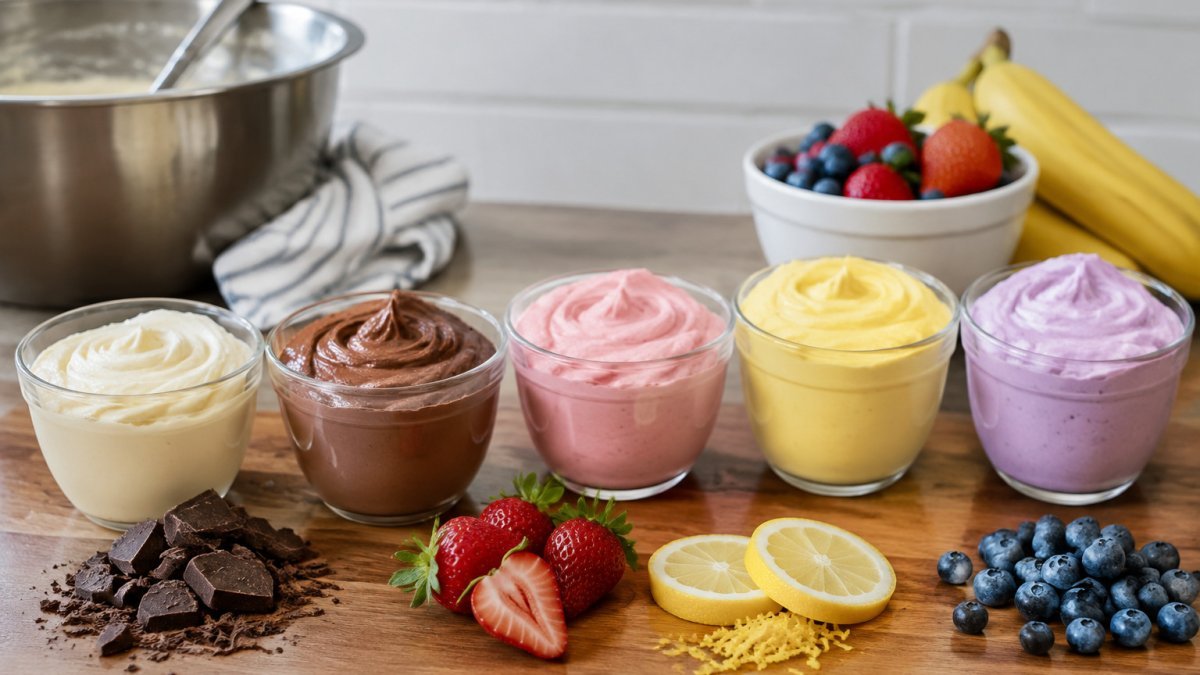
Each flavor type behaves differently in a custard base, so pick your direction before you start measuring. The table below gives starting amounts per quart of finished base, but the method matters as much as the number: some additions belong in the warm base, some should be infused and strained, and some are folded in after churning.
| Flavor Type | Starting Amount per Quart | How to Add It | Texture Risk |
|---|---|---|---|
| Vanilla or almond extract | 1/2 to 1 teaspoon | Whisk into the chilled base | Low |
| Peppermint or mint extract | 1/4 to 1/2 teaspoon | Whisk into the chilled base | Low |
| Fresh fruit puree | 1 to 1 1/2 cups | Cook down, cool, fold in after churning | Medium (water adds ice crystals) |
| Cocoa powder | 1/2 to 3/4 cup | Whisk into the warm base with the sugar | Low if blended well |
| Melted chocolate | 4 to 6 ounces | Whisk into the warm base off heat | Medium (can seize if too hot) |
| Ground spices (cinnamon, ginger) | 1/2 to 1 teaspoon | Steep in warm cream 10 minutes, then strain | Low |
| Whole spices or herbs | 1 to 2 tablespoons | Steep in warm cream 15 to 20 minutes, then strain | Low |
| Alcohol (bourbon, rum, liqueur) | 1 to 2 tablespoons | Stir into the chilled base | High (lowers freezing point) |
Extracts. These are the easiest place to start because they are concentrated and water-free. Add them to the chilled base, not the warm base, so the alcohol in the extract does not evaporate and the flavor stays bright. Start at the low end of the range, whisk thoroughly, and taste.
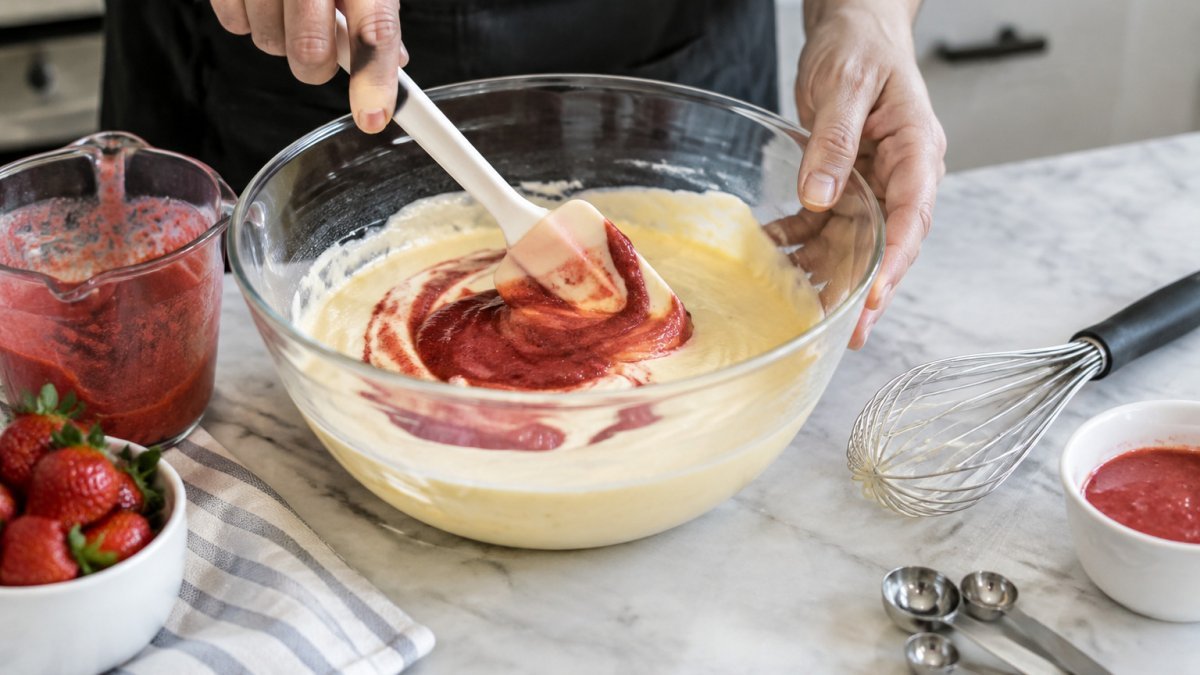
Fruit. Fruit brings water and acid, both of which work against a creamy texture. Cook fresh fruit down with a spoonful of sugar until it releases its juice and thickens, then cool it completely before folding it in after churning. This concentrates the flavor and drives off some of the water.
Chocolate. Cocoa powder and melted chocolate are not interchangeable. Cocoa powder disperses best when whisked into the warm base along with the sugar, which keeps it from clumping. Melted chocolate should be added off heat and whisked constantly; if the base is too hot, the chocolate can seize into grainy specks.
Spices and herbs. Ground spices can go directly into the warm base, but whole spices and herbs need time to infuse. Warm a portion of the cream with the spices for 10 to 20 minutes, then strain it back into the base. This extracts flavor without leaving gritty particles.
Alcohol. Alcohol lowers the freezing point, so a little goes a long way. More than 2 tablespoons per quart can keep the custard from firming up in a home freezer. Add it to the chilled base and expect a slightly softer set.
Scaling. All amounts above are per quart of finished base. To scale, multiply by the number of quarts, but do not scale extracts and alcohol linearly: their flavor intensifies faster than their texture impact, so increase them by about three-quarters of the proportional amount and taste as you go. Spices and cocoa scale linearly.
Start small. You can always add more, but you can’t take a flavor back out. Taste the base after each addition and note what you used, so you can repeat a good batch.
Step-by-Step: How to Add Flavorings Without Breaking Texture
Follow this order to keep your custard smooth and creamy:
- Make and chill the base. Cool it to at least 40°F before churning.
- Steep spices or herbs (if using). Warm a portion of the cream with spices for 10 minutes, then strain it back into the base.
- Whisk in extracts and cocoa. Add these to the chilled base and whisk until fully blended.
- Churn the base. Run your machine until it reaches a soft-serve consistency, about 20 to 25 minutes.
- Fold in fruit or mix-ins last. Add purees, chopped candy, or nuts in the final minute of churning or by hand after churning.
- Freeze until firm. Give it 4 to 6 hours in a covered container.
Watch out: Fruit purees should be cooked down and cooled first. Raw, watery fruit adds ice crystals and makes the custard grainy.
Making Homemade Frozen Custard Flavors Without an Ice Cream Maker
You don’t need a machine to make flavored custard at home. The trick is to freeze the base, then break up the ice crystals by stirring or blending several times.
Here is a simple no-churn method:
- Pour the chilled, flavored base into a shallow metal pan.
- Freeze for 45 minutes, then stir vigorously with a whisk to break up ice.
- Repeat every 30 to 45 minutes for about 3 hours.
- For a smoother result, blend the partly frozen mix in a food processor, then refreeze.
The texture will be firmer and less airy than machine-churned custard. Using heavy cream helps a lot. Many home cooks find that a little extra fat keeps the no-churn version softer.
Mix-Ins, Toppings, and When to Add Them
Mix-ins and toppings add crunch, chew, and extra flavor. Timing matters, because adding them too early can crush them or make them soggy.
- Add during the last minute of churning: Chopped cookies, brownie pieces, or small candy bits.
- Fold in by hand after churning: Fruit swirls, caramel, or fudge ribbons.
- Serve on top: Nuts, sprinkles, whipped cream, or fresh fruit slices.
Keep mix-ins small, about 1/4 inch or smaller, so they distribute evenly. Freeze them first if they are soft, like brownie pieces, so they don’t melt into the custard.
Troubleshooting Texture, Flavor Strength, and Dietary Needs
Most custard problems trace back to a measurable cause: too much water, too much sugar, too much alcohol, or not enough fat. Once you know the mechanism, the fix is usually a small adjustment to the next batch rather than a rescue of the current one.
Icy or grainy texture. Ice crystals form when there is more water in the base than the fat and sugar can hold in suspension. Fruit purees, juice, and alcohol all add water. The fix is to cook fruit down before folding it in, reduce alcohol or cook it off first, and keep the ratio of cream to milk high.
Custard won’t firm up. Sugar and alcohol both lower the freezing point. A base with too much of either will stay soft even after hours in the freezer. Check your sugar against the recipe and cut back by 1 to 2 tablespoons per quart if needed. For alcohol, stay at or below 2 tablespoons per quart, or reduce the liquor on the stove before adding it.
Flavor too weak. Cold mutes flavor, and some flavors fade more than others. Citrus zest, delicate herbs, and floral extracts lose intensity in the freezer, so use the high end of the range for those. Chocolate and spices hold up better. If a batch tastes weak after freezing, stir in a small amount of the same flavoring in a spoonful of plain base and swirl it through rather than remelting the whole batch.
Flavor too strong. Dilute with more plain base. This is easiest if you keep a quart of unflavored base in the freezer as a reset. Working in small batches makes the correction gentler than trying to fix a full gallon at once.
Custard tastes eggy or curdled. Eggy flavor comes from undercooking or overcooking the base. Cook gently until it coats the back of a spoon, then strain immediately. Curdling happens when eggs are added to liquid that is too hot; temper them slowly with a ladle of warm cream before combining.
Dietary and allergen-aware swaps. These change texture, so plan for it:
- Dairy-free: Full-fat coconut milk or a barista-style oat milk can replace the cream, but the result is lighter and icier. Add 1 to 2 tablespoons of a neutral oil or a tablespoon of cornstarch slurry to improve body.
- Egg-free: A cornstarch or arrowroot slurry can thicken the base, but the custard will be less rich. Increase the cream slightly to compensate.
- Nut-free: Check extracts and chocolates, which may be processed on shared equipment. Choose brands that label for allergens.
- Gluten-free: Most custard bases are naturally gluten-free, but mix-ins like cookies or brownies are not. Verify every add-in label.
Watch out: Substitutions compound. A dairy-free, egg-free base with added fruit and alcohol has four separate texture penalties, so make one change at a time and note how the batch sets before layering on another.
Planning Your Next Batch of Homemade Frozen Custard Flavors
Plan your flavors ahead, especially for a party or family gathering. Pick one base recipe and make two or three flavor variations from it. This keeps prep simple and lets everyone find a favorite.
If you are cooking for a crowd or want flavors you can’t easily make at home, you can look into professional options. A reader planning larger or event-sized batches may want to hand the job to professionals who can make custom frozen custard flavors for events. Or, if you would rather skip home prep altogether, you can order custom custard treats online in the flavors you’ve been planning.
Keep notes on each batch, including how much flavoring you used and how it turned out. Over time, these notes become your own custom flavor guide.
Frequently Asked Questions
What are some good flavors of custard?
Vanilla bean, chocolate, and caramel are the most reliable starting points because they pair well with almost any mix-in. Fruit flavors such as strawberry, peach, and lemon work well too, but they need to be added in a controlled way so the base stays creamy. Start with one flavor at a time so you can judge how much each addition changes the texture and sweetness before combining them.
What can I add to my custard?
You can add extracts, citrus zest, cocoa powder, melted chocolate, fruit purees, spices like cinnamon or cardamom, and small amounts of liquor. Add extracts and spices after the base has chilled, since heat can dull their aroma. Fruit purees should be cooked down and cooled first, because excess water can make the custard icy.
When should I add mix-ins to frozen custard?
Add mix-ins like chopped nuts, cookie crumbles, or candy pieces during the last minute of churning or when transferring the custard into a freezer container. Soft mix-ins such as fruit pieces should be folded in gently after churning so they stay intact. Chilling the mix-ins beforehand helps prevent them from melting into the custard.
What toppings go well with frozen custard?
Hot fudge, caramel sauce, fresh berries, crushed cookies, and whipped cream are popular choices that complement rich custard without overpowering it. Serve sauces slightly warm so they spread over the scoop, and add crunchy toppings just before serving to keep them from softening.

Leave a Reply