Table of Contents
- What Makes Frozen Custard Different at a Glance
- Frozen Custard vs Ice Cream: The Core Differences
- What Is Frozen Custard Made Of
- How Frozen Custard Is Made
- Why Texture and Mouthfeel Matter
- Homemade Frozen Custard vs Store-Bought
- Discover Your Perfect Frozen Custard Experience
- Frequently Asked Questions
Last Updated: October 25, 2026
What Makes Frozen Custard Different at a Glance
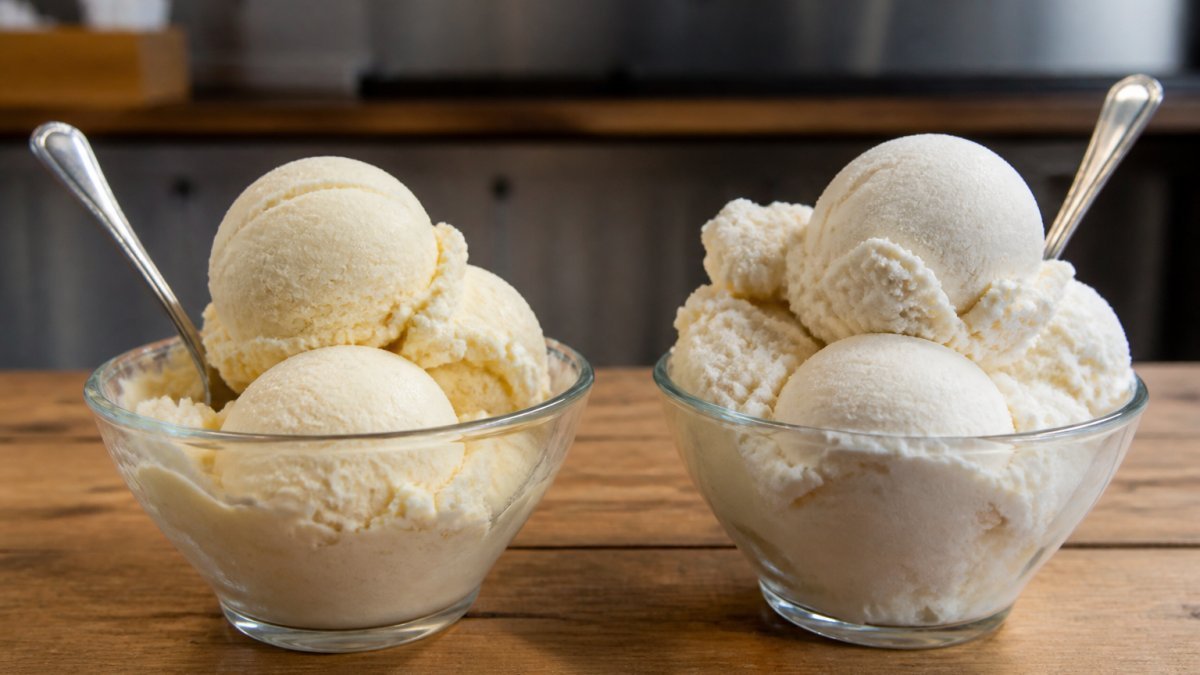
Frozen custard is different from ice cream in five key ways: egg yolks, fat content, air incorporation, churning speed, and serving temperature. At Fat Guy Frozen Custard, we craft our custard with these principles in mind, creating a dessert that’s richer, denser, and creamier than ice cream.
The main difference comes down to ingredients and process: frozen custard requires egg yolks, while ice cream does not, a single change that transforms texture, richness, and mouthfeel.
Frozen Custard vs Ice Cream: The Core Differences
The distinction between frozen custard and ice cream isn’t just marketing. Federal standards define what each product can legally be called, and those standards reflect real differences in how they’re made and taste.
Egg Yolks and Minimum Standards
Frozen custard must contain egg yolks. Ice cream does not require eggs at all. This is the defining characteristic that separates the two desserts.
Federal regulations require frozen custard to contain at least 1.4% egg yolk solids by weight. Ice cream has no such requirement, some ice creams contain eggs, but many don’t.
Egg yolks contribute more than flavor. Their lecithin acts as a natural emulsifier that binds ingredients and prevents ice crystal formation, so the dessert feels silkier on your tongue.
When you taste real frozen custard, you’re tasting eggs. That’s not a flaw, that’s the point.
Fat Content and Richness
Frozen custard contains more fat than ice cream in practice. Both have a 10% milk fat legal minimum, but frozen custard typically contains 14-16% milk fat, while most commercial ice cream stays at 10%.
Higher fat content means richer flavor and a creamier mouthfeel: fat carries flavor molecules and coats your mouth, and less air means more fat per spoonful.
This is why frozen custard feels heavier and more indulgent than ice cream. You’re eating more cream and fewer air bubbles.
Air Incorporation and Texture
Air incorporation, called overrun in the industry, determines how much of your spoonful is actually air versus dairy.
Ice cream typically has 40-50% overrun. That means half of what you’re eating is air. Frozen custard has 15-20% overrun. You’re getting far more actual custard per bite.
Less air means denser texture, so the custard melts slower on your tongue and feels heavier and more substantial.
The churning process controls overrun. Frozen custard machines churn slower than ice cream machines, incorporating less air and producing a thicker, denser product.
What Is Frozen Custard Made Of
Frozen custard contains five basic ingredients: milk, cream, sugar, egg yolks, and flavorings. Some recipes add stabilizers or gums, but the core is simple.
The ingredient list matters because simplicity creates quality. Fewer ingredients mean cleaner flavor. You taste the dairy, the eggs, the sugar, and the flavoring. Nothing masks or confuses those tastes.
Milk provides the base, cream adds richness and fat, sugar sweetens and controls freezing point, egg yolks create the custard texture, and flavorings complete the picture.
The Legal Definition Behind the Ingredients
Under the FDA’s standard of identity, frozen custard must contain at least 1.4% egg yolk solids by weight and at least 10% milk fat. Ice cream has no egg-yolk requirement, and most commercial ice cream sits at the 10% floor while frozen custard is typically formulated at 14-16% milk fat.
That gap between the legal minimum and real-world practice is where the texture difference lives. Quality producers exceed both floors because the mouthfeel depends on it.
The two numbers that matter most: 1.4% egg yolk solids (the legal floor for custard) and 10% milk fat (the legal floor for both custard and ice cream). Quality custard exceeds both.
Machine-Served vs. Hardened French-Style Custard
“Frozen custard” describes two related but distinct products, which confuses a lot of people.
The first style is machine-served custard, associated with the Midwest and stands serving it fresh from a soft-serve-style machine. It’s churned and dispensed at 25-28°F, has very low overrun (often 15-20%), and is eaten immediately, with a soft, dense, almost pudding-like consistency.
The second style is French-style custard, churned then hardened at much lower temperatures and scooped like ice cream.
Both are legally frozen custard if they meet the egg-yolk and milk-fat standards; the difference is process and serving temperature, not ingredients.
Temperature and the Ingredient List
Temperature matters too. Machine-served frozen custard is served at 25-28°F; ice cream at 0-10°F. The warmer serving temperature means frozen custard melts faster and feels softer on your tongue, which is part of what makes the texture feel so smooth and creamy.
Hardened French-style custard is stored and served colder, typically 5-10°F, and needs a few minutes of tempering before scooping. Straight from a 0°F home freezer, it will be too firm and may chip rather than scoop. That’s a temperature problem, not a recipe problem.
Compare that to many commercial ice creams, which contain stabilizers, gums, artificial flavors, and ingredients you can’t pronounce. Frozen custard, by legal definition, keeps things simpler.
How Frozen Custard Is Made
Making frozen custard starts with a custard base. Combine egg yolks, sugar, and milk in a pot and heat slowly, stirring constantly, until it reaches 160 degrees Fahrenheit.
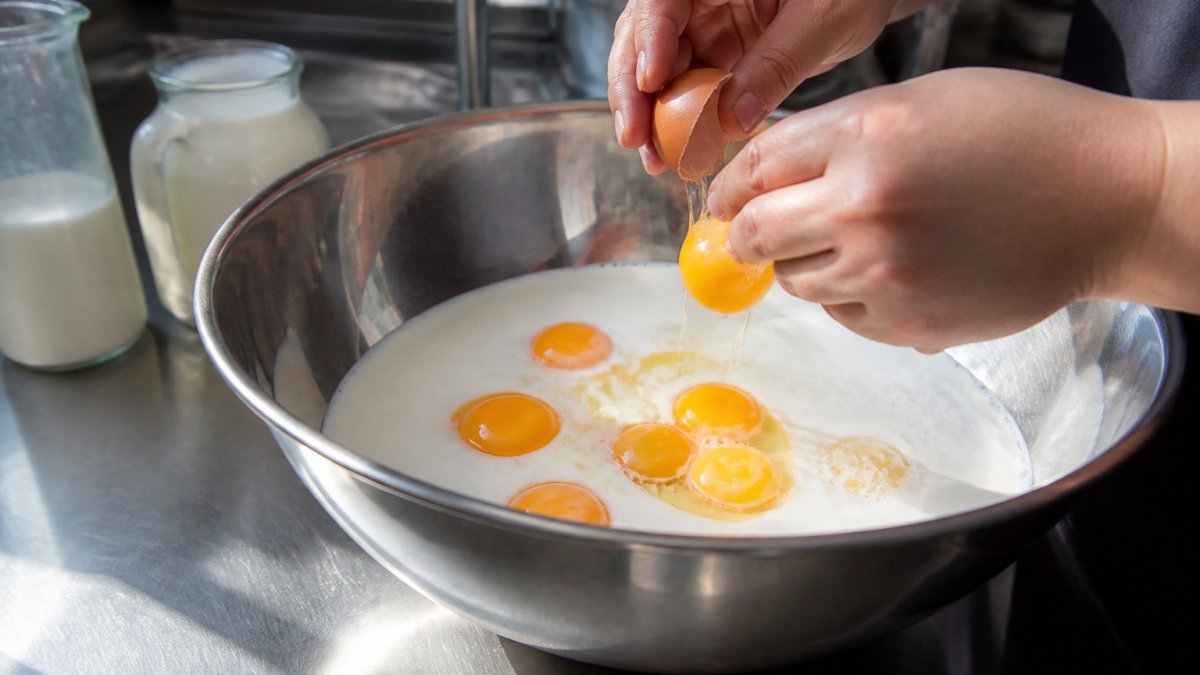
After heating, cool the custard completely, usually several hours or overnight in the refrigerator.
Once the custard is cold, you pour it into a frozen custard machine. The machine churns slowly while freezing. Slow churning is key.
Churning takes longer than ice cream production.
When the custard reaches the right consistency, you serve it immediately or store it in a hardening cabinet at 25-28 degrees Fahrenheit. That warmer temperature is crucial.
| Step | Time | Temperature | Key Point |
|---|---|---|---|
| Heat custard base | 10-15 minutes | 160°F | Pasteurize eggs |
| Cool custard | 4+ hours | 40°F or below | Must be cold before churning |
| Churn | 20-30 minutes | 25-28°F | Slow churning keeps overrun low |
| Serve | Immediate | 25-28°F | Warmer than ice cream |
Why Texture and Mouthfeel Matter
Texture is everything in a frozen dessert. You could have perfect flavor, but if the texture is wrong, the experience fails.
Frozen custard’s dense texture creates a specific sensation in your mouth. It feels smooth and creamy, not icy or grainy, and it melts slowly, releasing flavor gradually rather than all at once, giving you time to experience the full flavor profile.
But the mouthfeel is not magic. It comes from three measurable variables working together: overrun, fat content, and egg-yolk chemistry. Understanding each one explains why frozen custard behaves the way it does, and why home batches so often miss the mark.
Overrun: How Much of Your Spoonful Is Air
Overrun is the industry term for the air incorporated during churning, expressed as a percentage of the volume of the finished product. A 50% overrun means half the volume of your scoop is air. Ice cream typically runs 40-50% overrun.
Less air has a direct mechanical effect on texture. Air pockets interrupt the continuous fat-and-water matrix, making the product feel lighter and melt faster.
The churning process controls overrun. Frozen custard machines churn slower than ice cream machines, and the slower dasher speed incorporates less air. You cannot fix overrun after the fact, it is set during freezing.
Fat and Egg Yolks: Two Different Jobs
Fat and egg yolks both improve texture, but they do it through different mechanisms, and conflating them leads to bad recipe decisions.
Fat contributes richness and carries flavor compounds, but its more important textural role is interfering with ice crystal formation. Fat globules physically get in the way of water molecules organizing into large crystals, which is why higher-fat frozen desserts feel smoother.
Egg yolks work differently. They contain lecithin, a natural emulsifier that helps bind water and fat into a stable emulsion. They also contain proteins that, once cooked into a custard base, thicken the mix and further restrict water mobility.
If your homemade custard turns out icy, the problem is usually one of three things: the base was not cold enough before churning, the churn incorporated too much air, or the finished custard was stored too cold. Egg yolks and fat can only do so much if the process works against them.
Serving Temperature and the Melt Curve
Serving temperature is the third variable, and it is the one most often overlooked. Frozen custard served at 25-28°F is already partway through its melt curve when it hits your spoon. The fat is soft, the ice crystals are small and beginning to loosen, and the whole matrix yields easily.
This is also why storage temperature matters so much. A custard held at 0°F will firm up and lose the soft, dense quality that defines the style.
Why the Combination Matters
No single variable explains frozen custard’s mouthfeel. Low overrun gives density. Fat limits crystal size. Egg yolks refine the crystal structure and thicken the base. Warm serving temperature softens the matrix at the moment of eating. Change any one of these and the experience shifts.
That is why frozen custard devotees are loyal. They are not just choosing a dessert. They are choosing a specific sensory experience that ice cream cannot replicate, and one that is genuinely difficult to reproduce at home without the right equipment and temperature control.
Homemade Frozen Custard vs Store-Bought
Making frozen custard at home produces different results than buying it from a shop.
Homemade frozen custard offers control. Discover the real difference between frozen custard and ice cream, from egg yolks to texture, to help you decide if homemade is right for you.
The downside of homemade custard is equipment. You need a proper frozen custard machine.
Store-bought frozen custard, like what we craft at Fat Guy Frozen Custard, offers consistency and convenience.
The advantage of store-bought is also the advantage of any professional operation: we have proper equipment, we follow precise procedures, and we scale production efficiently.
Quality homemade custard rivals store-bought quality. But it requires the right equipment, proper technique, and patience.
If you want to discover your perfect frozen custard experience, we invite you to visit Fat Guy Frozen Custard.
Discover Your Perfect Frozen Custard Experience
Frozen custard is more than a dessert. It’s a specific product defined by ingredients, process, and tradition.
The egg yolks, the fat content, the slow churning, the low overrun, and the warmer serving temperature all work together to create something special.
At Fat Guy Frozen Custard, we honor these principles in everything we make. We use quality cream and milk. We incorporate fresh eggs. We churn slowly to create the right texture. We serve at the perfect temperature.
Whether you’re a frozen custard veteran or trying it for the first time, we invite you to experience the difference. Order custom custard treats online and taste why frozen custard has earned its devoted following.
Frequently Asked Questions
What is the main difference between frozen custard and ice cream?
Frozen custard contains significantly more egg yolks than ice cream. Federal regulations require frozen custard to contain at least 1.4% egg-yolk solids by weight, while ice cream contains little to no eggs. This higher egg content gives frozen custard its distinctly rich, velvety texture and creamy mouthfeel. Additionally, frozen custard typically has a higher fat content and less air incorporation, making it denser and more indulgent than standard ice cream.
Does frozen custard have more calories than ice cream?
Yes, frozen custard generally contains more calories per serving than ice cream due to higher fat and egg-yolk content. The exact calorie count depends on the specific flavor, toppings, and serving size. At Fat Guy Frozen Custard, our homemade recipes are crafted with premium ingredients, so portion size and flavor choice will affect your total calorie intake.
Can you make frozen custard at home?
Yes, you can make frozen custard at home if you have an ice cream maker. The basic process involves combining egg yolks, cream, milk, and sugar into a custard base, heating it to pasteurize the eggs, cooling it completely, then churning it slowly in an ice cream machine. The slower churn speed (compared to ice cream) is key to achieving that signature dense, creamy texture. Homemade frozen custard requires attention to food safety, proper temperature control, and the right equipment, but many enthusiasts find the results worth the effort.
Why is homemade frozen custard better than store-bought?
Homemade frozen custard is fresher, made with higher-quality ingredients selected specifically for flavor and texture, and customized to your taste preferences. Fat Guy Frozen Custard crafts each batch fresh in-house, controlling the exact ratio of eggs, cream, and milk to achieve the perfect balance of richness and smoothness.
Frozen custard isn’t just colder ice cream. It’s a distinct dessert built on specific ingredients, precise processes, and a commitment to richness and texture. Understanding these differences transforms how you experience frozen desserts. The next time you have a choice between ice cream and frozen custard, you’ll know exactly what you’re choosing and why it matters.

Leave a Reply