Quick Summary
Frozen custard is so creamy because it is made with egg yolks, milk and cream and contains less air than ice cream. Those egg yolks add natural richness and emulsify the fat into a smooth, dense base, so each frozen custard scoop feels heavier and silkier on the tongue.
- Frozen custard uses egg yolks, which add natural richness and body.
- It contains less air than ice cream, so each scoop stays dense.
- Cook the base until it thickens enough to coat the back of a spoon.
- Chill the base thoroughly before churning for a smoother texture.
- Let frozen custard soften a few minutes before serving to release its flavor.
Table of Contents
- What Frozen Custard Is and Why It Feels Different
- Frozen Custard Ingredients: Egg Yolks, Milk and Cream
- How Egg Yolks Emulsify and Thicken the Base
- Frozen Custard vs Ice Cream: Fat, Air and Density
- How Frozen Custard Is Made, Step by Step
- Freezing Speed, Ice Crystals and Serving Temperature
- Troubleshooting Grainy, Icy or Soft Custard at Home
- Trying Frozen Custard for Yourself This Weekend
- Frequently Asked Questions
Why Is Frozen Custard So Creamy?
Last Updated: October 31, 2026
What Frozen Custard Is and Why It Feels Different
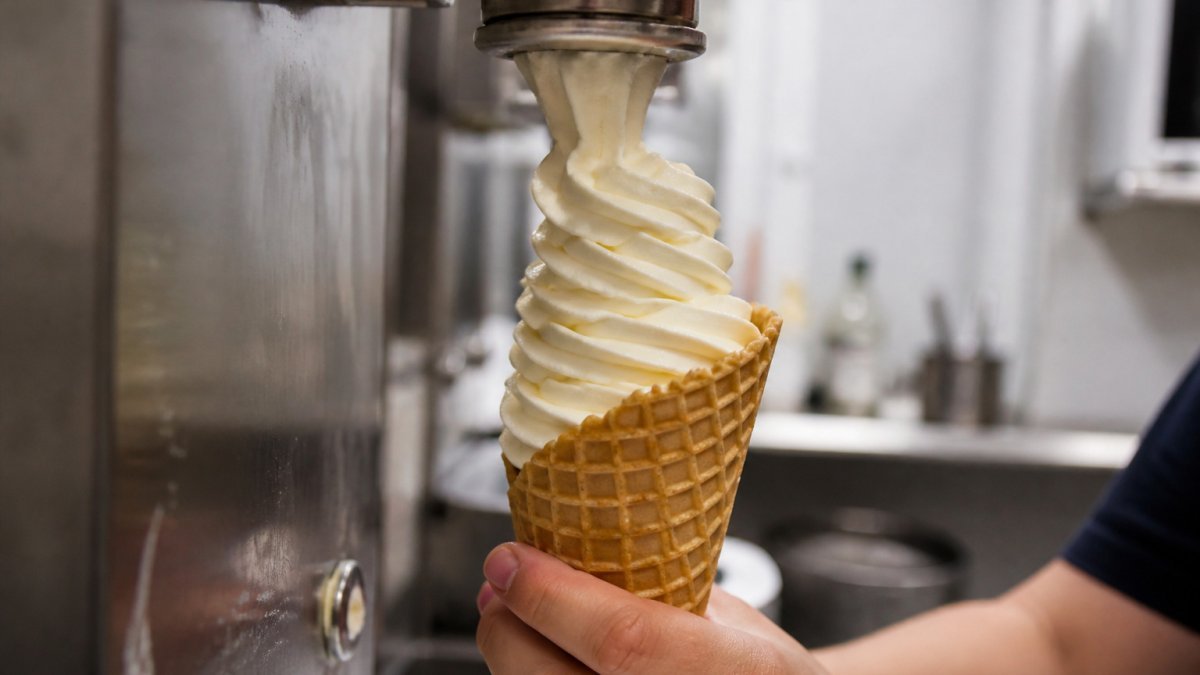
Frozen custard is a rich, dense frozen dessert made with egg yolks, milk and cream. At Fat Guy Frozen Custard, our homemade frozen custard is a treat for after a game or dinner in Van. But why is frozen custard so creamy? The short answer is that it is typically made with more egg yolk and less air than ice cream, which gives it a thicker, smoother bite.
The texture feels heavier on the tongue and melts more slowly. That is the whole idea behind the dessert, and it comes down to a few simple ingredient and process choices.
- Egg yolks add natural richness and body
- Less air keeps each scoop dense
- Higher fat coats the mouth and feels silky
- Slower freezing keeps the texture soft and smooth
Frozen Custard Ingredients: Egg Yolks, Milk and Cream
The base of frozen custard starts with a short ingredient list. Milk, cream, sugar, and egg yolks make up most of the mix. Vanilla or other flavorings get added after the custard is cooked.
Egg yolks do the heavy lifting. They carry natural fat and proteins that make the base thick and rich. Cream adds more fat, which gives a softer, silkier feel. Milk keeps the mix from getting too heavy.
Frozen custard ingredients often include:
- Whole milk for body and structure
- Heavy cream for extra fat and smoothness
- Egg yolks for richness and thickness
- Sugar for sweetness and softer freezing
How Egg Yolks Emulsify and Thicken the Base
Egg yolks do more than add flavor. They help the fat and water in the mix blend into a smooth, stable base. This process is called emulsification.
When the custard is cooked gently, the yolk proteins thicken and hold the fat evenly through the liquid. That even blend is a big reason frozen custard feels so smooth. Without it, the base can separate or turn grainy.
Frozen Custard vs Ice Cream: Fat, Air and Density
Frozen custard and ice cream look alike, but they feel very different. The biggest differences come down to fat, air and density.
That means each scoop has less volume and more substance. Ice cream often has more air mixed in, which makes it lighter and fluffier.
Here is a simple comparison:
| Feature | Frozen Custard | Ice Cream |
|---|---|---|
| Egg yolks | Yes, a lot | Usually less or none |
| Air content | Lower | Higher |
| Texture | Dense and silky | Light and airy |
| Richness | Heavier on the tongue | Lighter on the tongue |
Many people prefer frozen custard for a richer treat. Others like ice cream for its lighter feel. Both are good desserts, but they are made to taste different.
How Frozen Custard Is Made, Step by Step
Most explanations of frozen custard stop at “egg yolks and less air.” The practical how-to is where the real creaminess is won or lost. Here is a process-level walkthrough with the temperatures, cues, and timing that matter.
- Combine the dairy. Whisk the milk, cream, and about half the sugar in a heavy-bottomed saucepan. Warm over medium-low heat, stirring often, until the mixture steams and reaches roughly 140°F to 150°F. Do not let it boil, boiling can scorch the milk proteins and leave a cooked flavor.
- Whisk the yolks. In a separate bowl, whisk the egg yolks with the remaining sugar until the mixture lightens slightly and falls in a ribbon. The sugar helps keep the yolk proteins from clumping when heat hits them.
- Temper slowly. Ladle a small amount of the warm dairy into the yolks while whisking constantly, then add another ladle. This raises the yolk temperature gradually instead of shocking it. A common pattern is to temper in at least three additions before combining.
- Cook to coat. Return the tempered mixture to the saucepan and cook over low heat, stirring constantly with a spatula and scraping the bottom and corners. The base is ready when it thickens enough to coat the back of a spoon, often called nappe, and a finger drawn across the spoon leaves a clean line. Most home cooks find this happens around 170°F to 180°F. Do not let it exceed a gentle simmer.
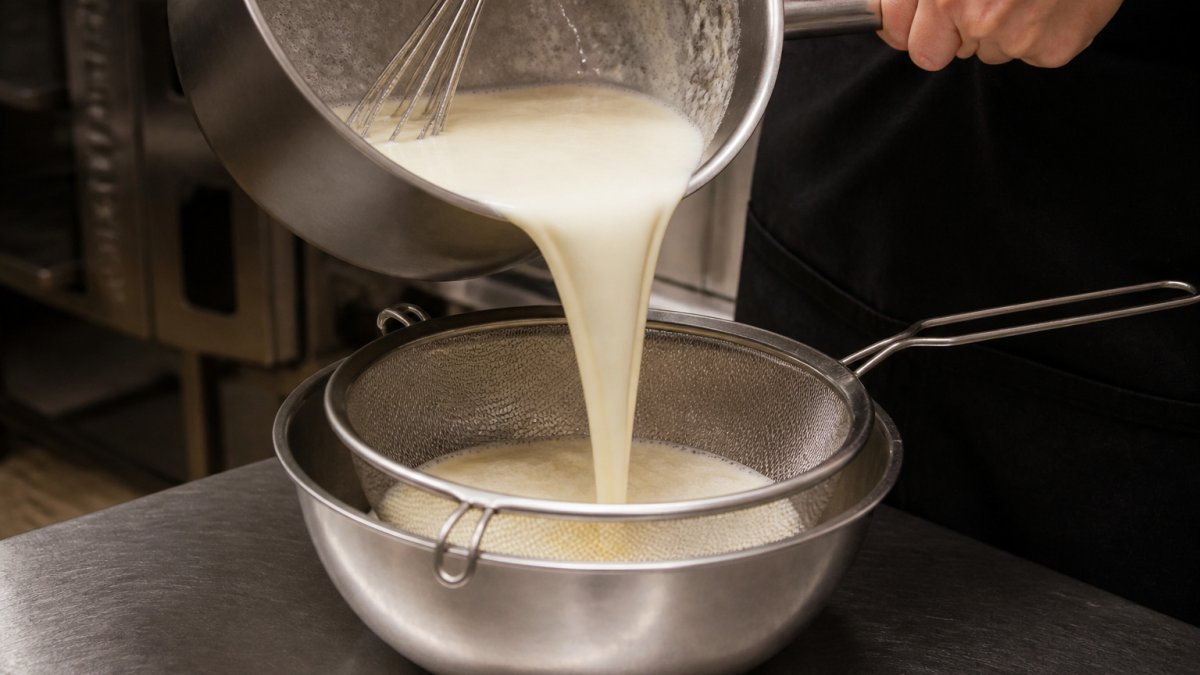
- Strain and chill fast. Pour the base through a fine-mesh strainer into a clean container to catch any stray cooked egg. Cool it quickly by setting the container in an ice-water bath, stirring occasionally, then refrigerate until it is thoroughly cold, ideally overnight or at least 4 hours. A cold base churns faster and smoother.
- Age the base. Letting the base rest in the refrigerator gives the fat and proteins time to hydrate and the flavors to meld. Many practitioners treat this aging step as the difference between good and great texture.
- Churn. Freeze the base in an ice cream machine according to the manufacturer’s instructions. Stop when it looks like soft-serve, thick, glossy, and holding a peak, rather than letting it run until it looks dry. Over-churning whips in air and defeats the dense custard texture.
- Freeze to scoopable firmness. Transfer to a shallow container, press plastic wrap against the surface, and freeze until firm enough to scoop, usually a few hours. For the classic soft, silky serve, let it temper at room temperature for a few minutes before scooping.
Keep a instant-read thermometer handy. The two numbers that matter most are the cook temperature of the base (thick enough to coat a spoon, roughly 170°F to 180°F) and the temperature of the base going into the machine (thoroughly chilled, ideally around 40°F or below).
Egg yolks are a raw animal product until the base is fully cooked. Cook the custard until it visibly thickens and coats a spoon, and refrigerate any uncooked base promptly. If you want to skip the egg-cooking step entirely, use a pasteurized egg yolk product and follow its label directions.
Freezing Speed, Ice Crystals and Serving Temperature
Creaminess is partly a physics problem. The texture you feel on the tongue is largely determined by the size of the ice crystals in the frozen dessert and by how much unfrozen liquid remains between them.
Why crystal size matters. As the base freezes, water turns into ice crystals. The faster the base freezes, the more crystals form at once and the smaller each one stays. Small crystals read as smooth and creamy; large crystals read as icy or gritty. Slow freezing lets a smaller number of crystals grow large, which is why a warm base or an underpowered machine produces a coarse texture.
What controls freezing speed. Several practical factors drive it:
- Base temperature going in. A thoroughly chilled base (around 40°F or below) freezes faster than a lukewarm one.
- Machine contact and movement. The dasher or paddle constantly scrapes the freezing surface, so the base freezes in thin layers rather than one solid block. A machine that fits its bowl properly and is not overfilled churns more efficiently.
- Batch size. Overfilling the bowl insulates the mix and slows freezing. Fill to the manufacturer’s line, not above it.
- Pre-chilled bowls. For freezer-bowl machines, freeze the bowl solid, usually 12 to 24 hours, before churning.
Overrun in plain terms. Overrun is the air whipped into the dessert, expressed as a percentage of the base volume. A 50% overrun means the finished dessert contains half again the volume of the base in air. Commercial ice cream often runs well above that; frozen custard is typically churned to a much lower overrun so each scoop stays dense. At home, you can estimate overrun by comparing the volume of base you poured in with the volume of frozen dessert you scoop out, a modest increase means low overrun and a denser result.
Serving temperature. Frozen custard is at its creamiest when it is not rock-hard. Straight from a deep freezer, the dessert is cold enough that the fat feels firm and the flavor reads muted. Letting a scoop stand for a few minutes, or tempering the whole container in the refrigerator for 10 to 15 minutes, softens the fat and releases aroma, which is why the first bite after a short wait tastes noticeably richer.
Troubleshooting Grainy, Icy or Soft Custard at Home
If your homemade frozen custard does not turn out right, the cause is often easy to fix.
- Grainy texture: The eggs may have cooked too fast. Cook more slowly and strain the base before chilling.
- Icy texture: The base may not have been chilled enough, or the freezing was too slow. Chill longer and churn promptly.
- Soft or runny custard: Too little egg yolk, too much milk, or not enough freezing time can cause this. Increase the yolk slightly or freeze longer.
Watch out: Undercooked egg yolks are a food safety risk. Cook the custard until it reaches a thick, spoon-coating consistency, and keep raw egg base refrigerated until it is cooked.
Trying Frozen Custard for Yourself This Weekend
Frozen custard is easy to enjoy, whether you make it at home or try it at a local shop. At Fat Guy Frozen Custard in Van, our treats are homemade with custom flavors and homemade cones, so you can taste that rich, creamy difference for yourself. You can also order custom custard treats online without visiting in person. If you are looking for a nearby spot, find a local frozen custard shop to start your weekend treat.
If you want to explore the dessert at home, you can compare frozen custard and ice cream textures side by side. To learn more about how the two desserts differ, read about what sets frozen custard apart from ice cream. When you are ready to treat yourself, visit Fat Guy Frozen Custard’s website to view the menu card.
Frequently Asked Questions
What is the main difference between ice cream and frozen custard?
The main difference is the egg yolks. Frozen custard is made with a cooked base that includes egg yolks, which adds richness and helps the dessert hold a dense, smooth texture. Ice cream often uses little or no egg. Frozen custard also typically churns with less air, so each scoop feels heavier and creamier than a lighter, fluffier ice cream of the same volume. Both are frozen desserts, but frozen custard usually tastes richer and melts more slowly.
Do egg yolks make frozen custard creamier?
Yes. Egg yolks contain fats and proteins that emulsify with the milk and cream, binding the water and fat together. This emulsification thickens the base and produces a smoother, silkier mouthfeel. Cooking the custard base until it coats the back of a spoon also helps the proteins set and the texture become consistent. Because the yolks add natural richness, frozen custard can taste creamy even when the overall fat content is similar to ice cream.
Does frozen custard have less air than ice cream?
Generally, yes. Air content is measured as overrun, the percentage by which the volume increases during churning. Frozen custard is usually churned to a lower overrun than many ice creams, so less air is whipped into the mix. Lower overrun makes the dessert denser and heavier. You can estimate overrun at home by weighing a measured volume of the mix before and after freezing and comparing the two weights.
Why does my homemade frozen custard turn out grainy or icy?
Graininess usually comes from overcooked or curdled egg yolks, or from large ice crystals forming when the mix freezes slowly. Cook the base gently and stop at the coating stage, then chill it fully before churning. Freezing it quickly in a cold machine bowl helps keep crystals small. Icy texture can also come from too little fat or sugar, so keep the recipe’s cream and sugar amounts intact.

Leave a Reply